Aaaahh...it's real nice to be in class and back in action again. :)
I noticed that there's nothing on photosynthesis here. So here's one on light-dependent reaction. Found this animation very clear in explaining the process.
http://dendro.cnre.vt.edu/forestbiology/photosynthesis.swf
Tuesday, November 28, 2006

Monday, November 27, 2006
The Mammalian Kidney
This one is to help with the kidney and excretion part. Remember, if you know the parts of the kidney and relate it to what happens there, it'll be easier for you to memorize the whole process.
http://bcs.whfreeman.com/thelifewire/content/chp51/51020.html
http://bcs.whfreeman.com/thelifewire/content/chp51/51020.html
Translocation
Ok I decided to provide some help for the ones who are doing the presentation on this topic on Friday. Check out this site for animations on pressure flow.
http://bcs.whfreeman.com/thelifewire/content/chp36/36020.html
Now the real test is if these ones visit this blog or not. :)
All the best preparing and presenting!
http://bcs.whfreeman.com/thelifewire/content/chp36/36020.html
Now the real test is if these ones visit this blog or not. :)
All the best preparing and presenting!
Friday, November 24, 2006
Transpiration

I just realised that I don't have anything posted to help us understand transpiration. So this one goes out specially to the July '06 group. These animations give an overview of the whole transpiration/water movement process. I showed you bits of it in class today. It's the same one.
This link, on the other hand, is more of a revision help for leaf structure:
Thursday, November 16, 2006
Fun facts and quirky quirks!
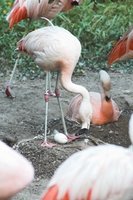
- Flamingos turn pink from eating shrimp because of the beta-carotene content in the shrimp. Flamingos that don't eat shrimp are white and not pink. Beta-carotene is also in carrots. If we humans ate nothing but carrots all the time, our skin would have an orangish tint to it..
- When you are eating a piece of fruit, you are eating a swollen ovary! Yes, that's right...fruit comes from a flowering plant which contains an ovary which will become the fruit! Food for thought: When you are drinking coffee you are drinking fruit juice!
- Giraffes have adapted an extraordinary tongue for obtaining their staple food source, acacia leaves. The tongue reaching up to 3 feet in total length is prehensile allowing it to maneuver around the large thorns adorning the branches of the tree. Recently it was also found that some acacia species adapted a nauseating liquid driving other animals away. By studying stomach contents and dung, researchers discovered a bacteria developed in the digestive system which once again foils the defense of the tree.
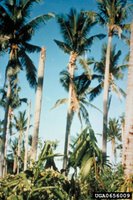
- Cadang-Cadang disease, which occurs in coconut trees, is named after the noise the coconuts make when they fall to the ground.
- Many scientists say that the most effective sleeping position is the fetus position. Reason? That position allows the body to experience the best blood circulation.
- The shape of plant collenchyma cells and the shape of the bubbles in beer foam are the same - they are orthotetrachidecahedrons.
- If all the molecules of DNA in a single human cell were laid side by side they would stretch for 2 meters but it is all packed into a nucleus 10 millionths of a metre across.

Monday, November 13, 2006
Cardiac cycle
Wow...it's been a while. I wonder how everyone's doing after almost a month of exams. As for me, sitting in the office all day is not quite my idea of enjoying work. So I'm looking forward to seeing you guys in class very soon. Not so sure you guys feel the same huh? ;)
Anyways, I remember we discussing this in class once and I think this link would give you a clearer picture of what goes on in the cardiac cycle. Go check it out ya (hhmmm...I wonder if anyone still visits this blog with the exams and all).
http://library.med.utah.edu/kw/pharm/hyper_heart1.html
Anyways, I remember we discussing this in class once and I think this link would give you a clearer picture of what goes on in the cardiac cycle. Go check it out ya (hhmmm...I wonder if anyone still visits this blog with the exams and all).
http://library.med.utah.edu/kw/pharm/hyper_heart1.html
Subscribe to:
Posts (Atom)